
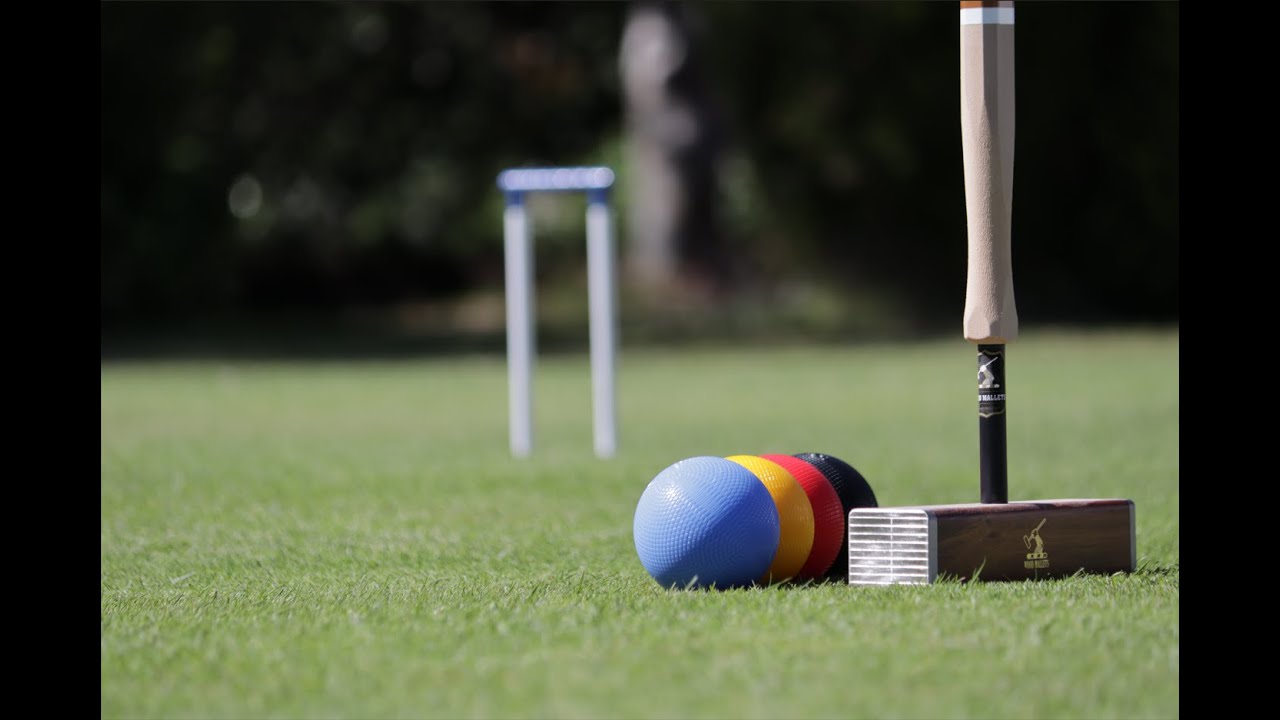
When selecting a mallet the three main options to consider are overall length, weight and type of handle.
Mallet length
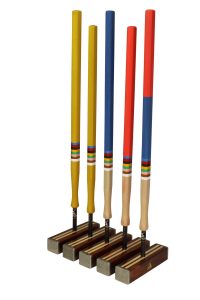 I’m often asked what length mallet a customer should use. This is entirely a personal choice. Don’t let anyone tell you what length you should use. It’s what works best for you! Apart from the players height and typical stance, the ideal height of a mallet depends on what style of grip the player uses and their stance. There are three commonly used styles, the standard grip, Irish grip and Solomon grip. New players should try out different mallets and grip styles before deciding what length to order. Once you’ve established what feels comfortable for you, measure from the ground to an inch above where your top hand naturally and comfortably holds the handle. This should be the overall length. Remember, it’s easier to shorten a handle than it is to lengthen it! If in doubt, add an inch. We can custom make handles to virtually any length.
Mallet weight
A 3.00 lb mallet is usually a good compromise and neither extreme is recommended. A heavier mallet like 3 lbs 2 oz will help for longer shots but is more difficult to control for stop shots etc. Lighter mallets of about 2 lb.14 oz can offer for more control but with less head weight, the likelihood of the head twisting during the swing is higher and more effort is required for long roquets. It’s all about the mechanics of the pendulum swing. If power is lacking, use a longer backswing and let the mallet do the work. A shorter mallet has less swing weight so if anything, it needs more weight in the head to achieve the same amount of power. The balls still weigh a pound each. A lighter head will need more wrist strength to achieve the same distance.
Another important factor to bear in mind is the condition of the lawns. Obviously a lighter mallet is better on a hard and fast lawn and conversely a heavy mallet is advantageous on a slow heavy lawn. The previous recommendations assume that tournament balls weighing 1.00 lbs are being used.
Head size
Our Evolution mallet head dimensions are 60 mm wide by 55 mm high but the Evolution heads are also available in a narrow configuration 55 mm wide x 60 mm high. The wider head has a lower centre of gravity and is slightly more stable in the swing. Original and Discovery heads measure 65 mm wide x 60 mm high.
With regards the overall head length, 9 1/4″ used to be the default but without a doubt, 10″ is the standard head length today especially with peripherally weighted heads. Some players find that 11″ heads are beneficial but they can make some shots a little more difficult. Like for instance, stop shots. A very small number of players use narrow heads up to 12” in length.
We can of course custom make heads to different dimensions for an additional charge of NZ$40.00 but the Evolution mallet heads can only be made to different lengths.
Grips
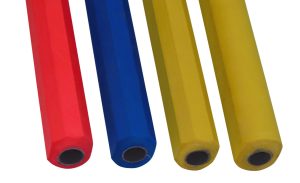
These are 1.6 m long synthetic cushion grips. They’re are extremely comfortable, lightweight, and long lasting. Available in a black, blue or red.

Mallet Shaft
Turned English white ash handles are the most economical and are used by a large proportion of players worldwide. Each handle is stress tested in the workshop and great care is taken to ensure that the grain runs in line with the head. They shouldn’t break in the course of reasonable use and care.
The fibre glass handles are preferred by a minority for their driving power and the fact that they’re virtually indestructible but they are heavy which is detrimental to the balance of the mallet.
Our Carbon 17 mm tubular handles on the Evolution and Discovery mallets are considerably lighter and very strong. They’re made to a reasonably stiff flex unless otherwise requested. We do have a more flexible shaft if preferred. The long length octagonal EVA closed cell grip is the ultimate grip material being waterproof and comfortable and light. The whole handle weighs and average of just 10 ounces.
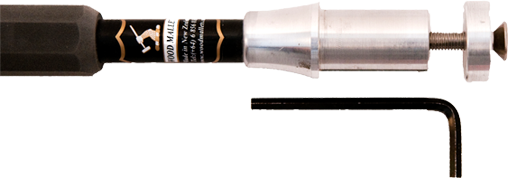 The carbon shafts on the Discovery and Evolution mallets can have aluminium fittings so that heads may be removed with the use of a hex key. This is an optional extra but does add weight to the centre of the heads which is counter productive. The two piece handle with an aluminium collar is increasingly popular for players wanting to pack their mallets in a suitcase for travelling.
Peripheral weighting
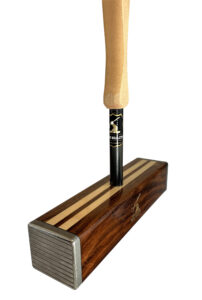 What makes a better mallet is reducing the weight in the handle and re-distributing some of the mass to the striking faces. This increases the moment of inertia on impact and makes the head more stable during the swing. Also the mallet is less likely to twist when shots are hit off-centre. It’s fair to say that peripherally weighted mallets are more accurate.
Matched with a lightweight carbon tubular shaft and EVA grip material these make a superbly balanced mallets that provide the player with more power and yet maintain better control.